AUDI Konfuzius-Institut Ingolstadt

2023兔年国画挂历作品征集大赛

JULY 15 TO
SEPTEMBER 30
YOU ARE CREATIVE, OPEN FOR SOMETHING NEW
AND YOU PAINT WITH PASSION?

According to the Chinese peasant calendar, 2023 will be the YEAR OF THE RABBIT. For this occasion, we would like to design a wall calendar with your help and fill it with your artwork!
In addition to the drawing, the works should also contain a suitable Chinese saying (“Chengyu”) or poem and be thematically related to the YEAR OF THE RABBIT.
From the submitted works, twelve pictures plus a cover picture will be selected by a 4-member jury. Printed works will be rewarded with a 50 € voucher (Bösner/Hugendubel) and three calendars.

Are you interested? Fill out the entry form and submit it with your work.

REQUIREMENTS


Only one artwork may be submitted per person. Maximum size is Din A3, submission can also be made digitally as a PNG / PDF file with 600 dpi.
In addition to the drawing, the artwork must contain a poem or a Chinese saying (“Chengyu”) and be thematically related to the Year of the Rabbit.
The saying or poem can be written in long or short characters. A self-written poem should not contain less than 10 characters but should also not be too long.
To participate, the conditions of participation must be accepted (see below)

New Journal Article accepted in Frontiers in Artificial Intelligence

Our lab’s collaboration with the Life Sciences Department at TU Munich and the Interdisciplinary Breast Center at the Helios Klinikum Munich West resulted in a new research article published in the prestigious Frontiers in Artificial Intelligence – Medicine and Public Health (Mathematical and Computational Oncology).

The work on Data-driven Discovery of Mathematical and Physical Relations in Oncology Data using Human-understandable Machine Learning introduces a new framework for mathematical and computational oncology tools that exploit network approaches for the mathematical modeling, analysis, and prediction of cancer development and therapy design. Well done!

The preprint is available at: https://www.biorxiv.org/content/10.1101/2021.08.13.456200v1 

New journal article accepted in MDPI Symmetry

Our lab’s collaboration with IBM Research Zurich and the Computer Science Department at the University of Surrey resulted in a new perspective article published in the prestigious MDPI Symmetry under Networks in Cancer: From Symmetry Breaking to Targeted Therapy.

This perspective article gathers the latest developments in mathematical and computational oncology tools that exploit network approaches for the mathematical modelling, analysis, and simulation of cancer development and therapy design. Well done!

The full article is available at: https://www.mdpi.com/2073-8994/13/9/1559 

New journal article accepted in IEEE Sensors

Our latest work on Learning Insights from a Single Motion Sensor for Accurate and Explainable Soccer Goalkeeper Kinematics has been accepted for publication in the prestigious IEEE Sensors Journal.


This work is part of PERSEUS Project (Platform for Enhanced virtual Reality in Sport Exercise Understanding and Simulation, No. ZF4017410SS9) funded by the Central Innovation Program for Small and Medium-sized Enterprises (ZIM) from the German Federal Ministry for Economic Affairs and Energy (BMWi).


The preprint is available at:

https://www.techrxiv.org/articles/preprint/Less_is_More_End-to-end_Learning_of_Insights_from_a_Single_Motion_Sensor_for_Accurate_and_Explainable_Soccer_Goalkeeper_Kinematics

Well done team and collaborators!

PROMISE: Personalized Rehabilitation in Oncology specific Motor deficits using Intelligent Sensing and Extended reality

Context

Chemotherapy-induced neuropathies (CIPN) have gained clinical significance due to the prevalence of malignant disease and the use of new chemotherapeutic drugs; their prevalence is also reported to be 30%–40%, with high variance depending on the drug(s) used and treatment scheme. With over 600.000 new cases in 2018 and almost 2 million prevalent cases on a 5-year prediction in Germany, cancer is still in the foreground of chronic diseases that require innovative and impactful solutions. CIPN is one of the most frequent adverse effects of many commonly used chemotherapeutic agents and has a strong impact on patients’ quality of life. CIPN is a severe problem in oncology leading to dose reduction, treatment delay, or discontinuation. It causes long-lasting disturbances of daily functioning and quality of life in a considerable proportion of patients, due to its sensory and motor symptoms.

Research partners

Goal 

PROMISE is a technological intervention for polyneuropathies that provides personalized quantification and adaptive compensation of sensorimotor deficits. The initial instantiation tackles CIPN and its rehabilitation in cancer survivors after chemotherapy. It proves the potential that motion capturing technologies, wearables, and machine learning algorithms have in combination in a digital intervention aiming at personalized physical rehabilitation.
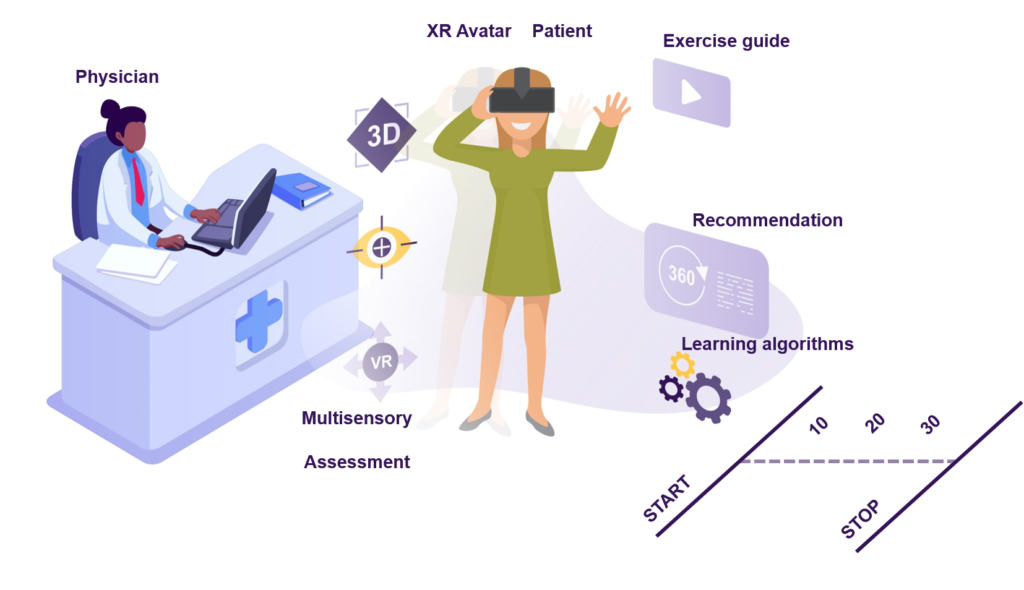
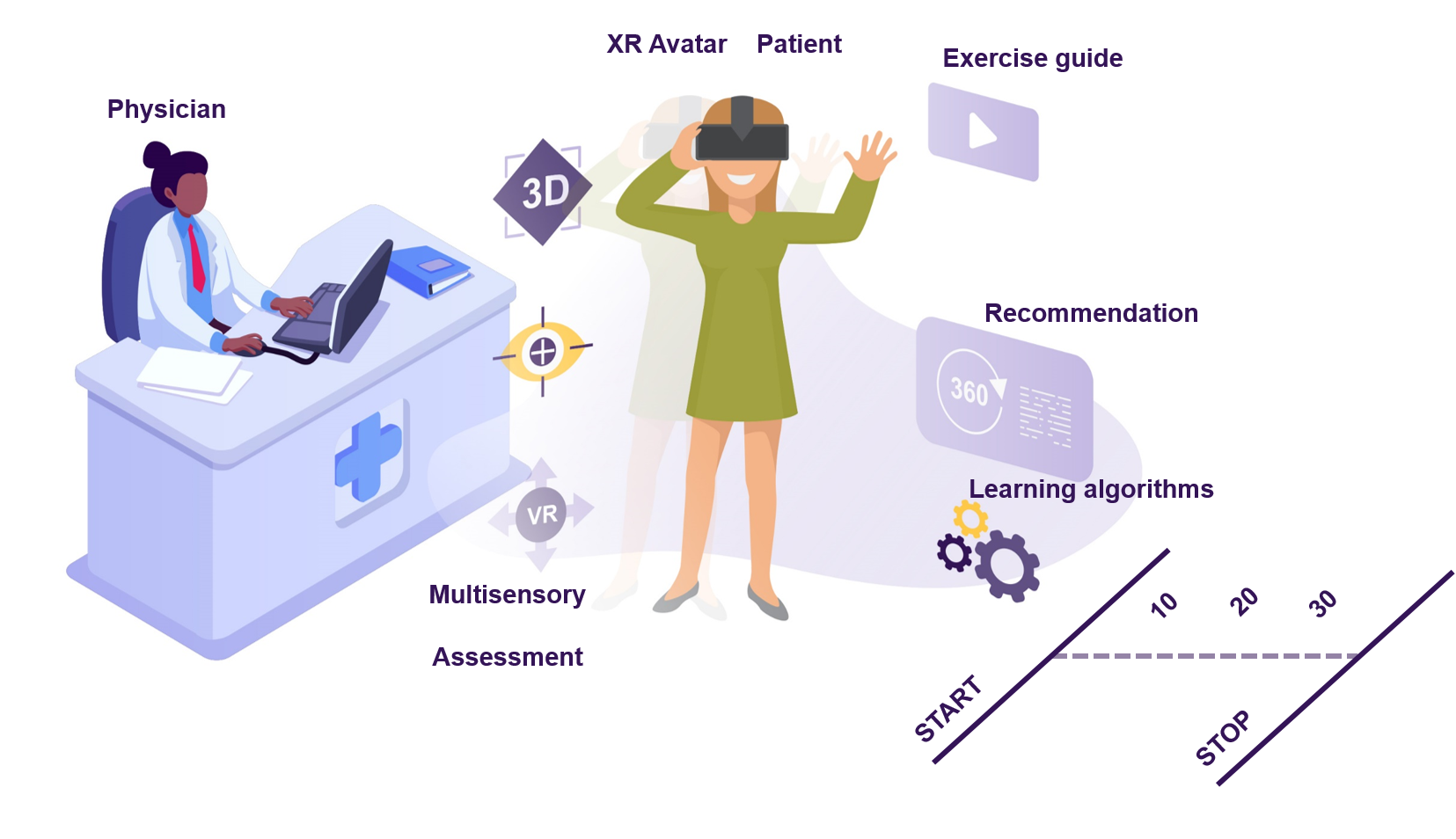
PROMISE explores the potential that digital interventions have for sensorimotor CIPN assessment and rehabilitation in cancer patients. Our primary goal is to demonstrate the benefits and impact that Extended Reality (XR) avatars and AI algorithms have in combination in a digital intervention aiming at 1) assessing the complete kinematics of deficits through learning underlying patient sensorimotor parameters, and 2) parametrize a multimodal XR stimulation to drive personalized deficit compensation in rehabilitation 3) quantitatively track the patient’s progress and automatically generate personalized recommendations 4) quantitatively evaluate and benchmark the effectiveness of the administered therapies.

Overview

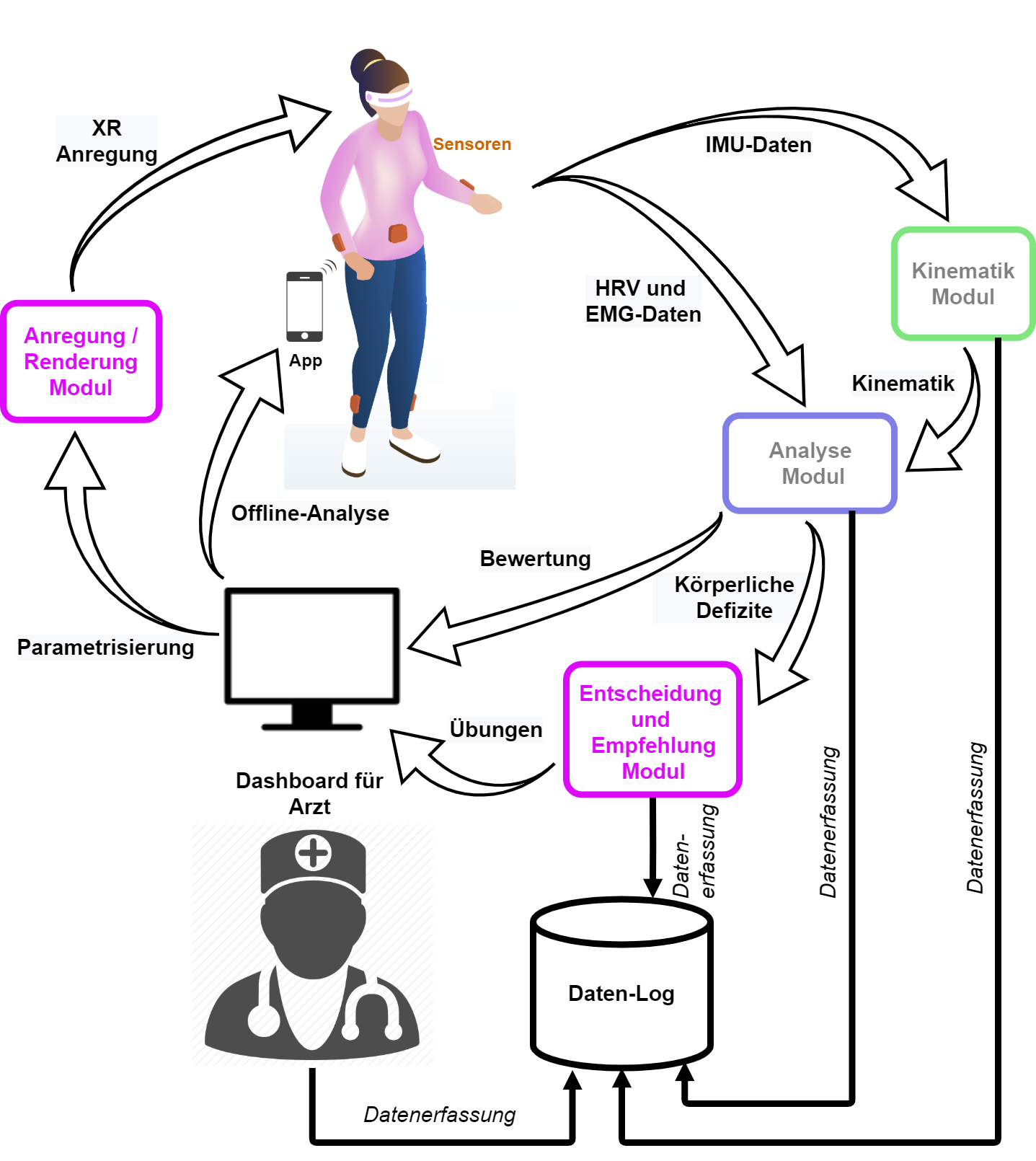
The generic system architecture is depicted in the following diagram. The rich sensory data is responsible to describe a complete assessment. Through machine learning algorithms each of the modules provides a powerful interface from the patient to the physician.
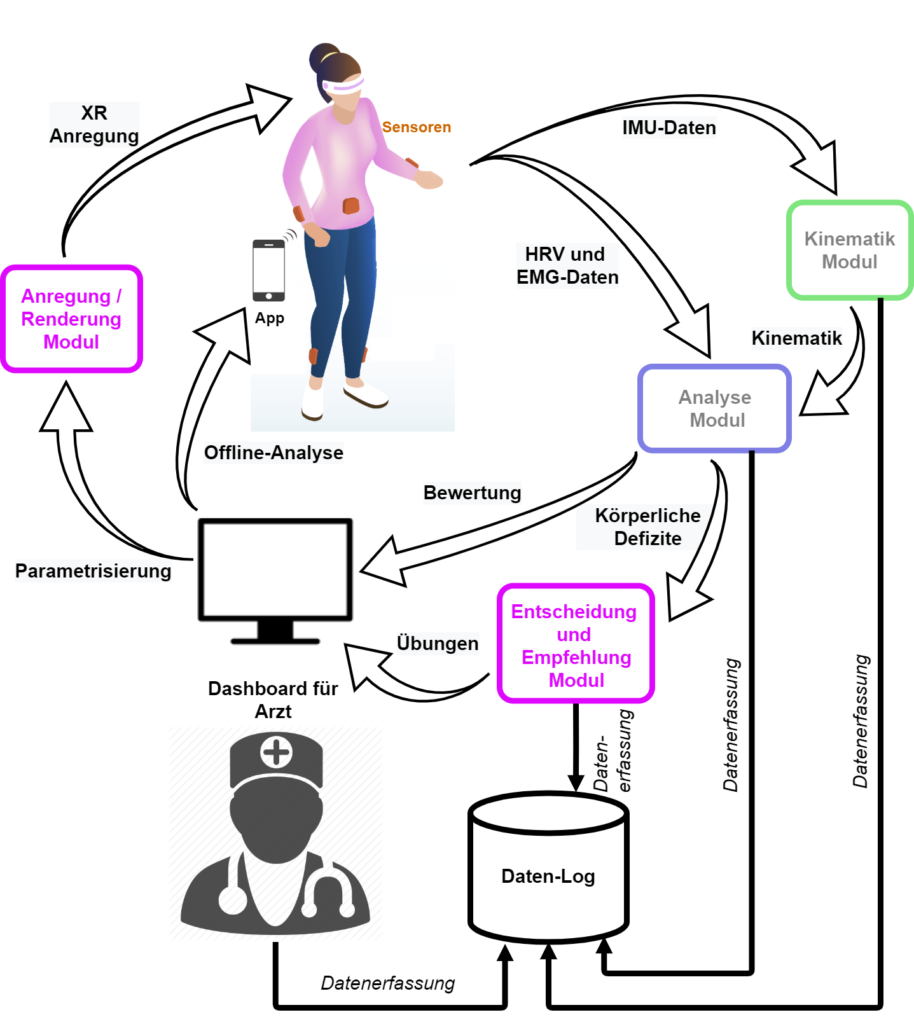
 

PROMISE will address the sensorimotor symptoms of CIPN. It will use commodity digital technologies, such as Extended Reality (XR) and Machine Learning (ML), in combination, for personalized CIPN sensorimotor rehabilitation. We expect that PROMISE will reduce the severity of the weakened or absent reflexes or the loss of balance control through personalized quantification of deficits and optimal compensation. All these with an affordable, adaptive, and accessible platform for both clinical and home-based rehabilitation.

The core element is the inference system capable of translating the assessment into actionable insights and recommendations for the patient in both clinical and home-based rehabilitation deployment of PROMISE.
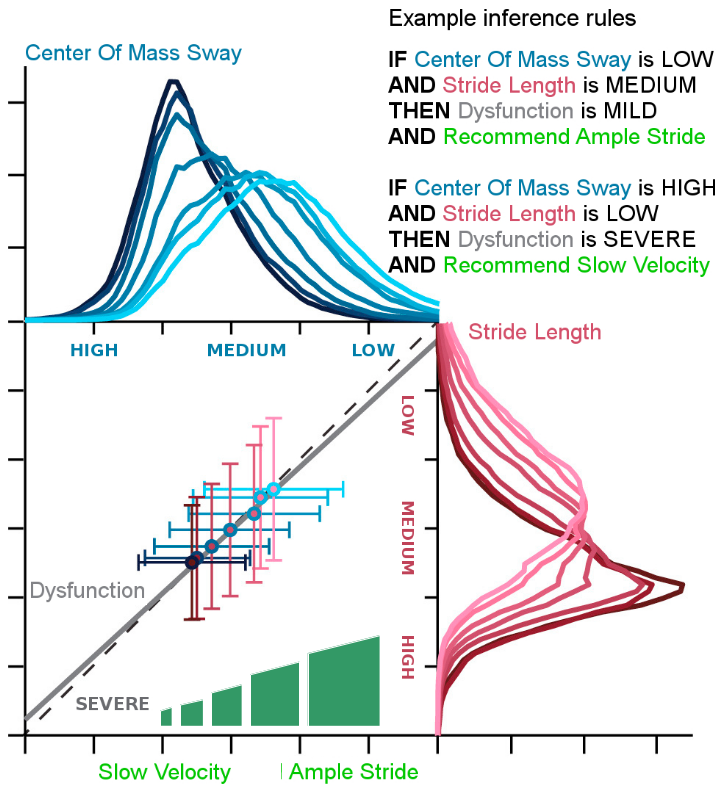
As a technical innovation, PROMISE will offer a platform which can be used in both clinical (laboratory) and home rehabilitation. PROMISE will use a combination of affordable wearables (i.e. IMU, EMG, HR) and recommend the best configuration of number and placement of such sensors that capture patient motion peculiarities.
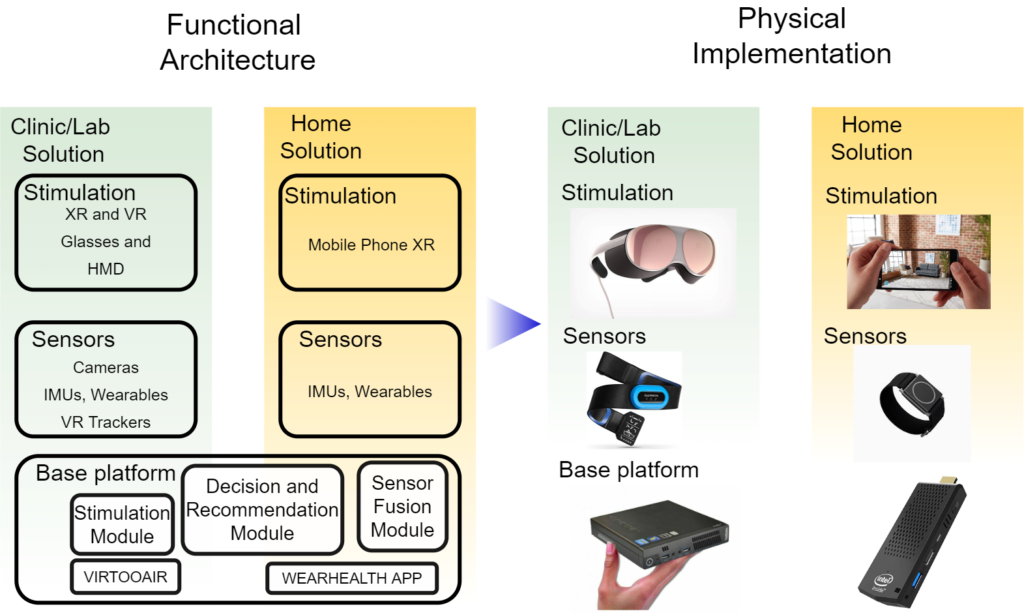
For instance, the laboratory version will comprise the base platform and additionally all sensors and physician dashboards (i.e. cameras, IMUs, wearables, VR trackers) for a high-accuracy assessment and stimulation. The simulation plays an important role in the clinical version as the physician/therapist can guide the patient. The home-based rehabilitation version of the solution will use a limited set of sensors (i.e. IMUs) and focus continuous monitoring with limited / no stimulation. Such a modular design will allow PROMISE to cover the whole rehabilitation spectrum allowing for continuous patient interaction.

ETH – AKII Lab Seminar: Biomechanics and Rehabilitation

On Thursday, the 8th of April 2021, 10:00, AKII Lab hosts a seminar on Biomechanics and Rehabilitation with a great invited talk from a world expert in Robotic Rehabilitation, Dr. Fabian Just

Title:

Usability innovations in rehabilitation robotics


Abstract:

In the last 20 years, robotic devices are increasingly used for rehabilitation training of neurological patients. Robots can increase the intensity through adaptive and gamified training while relieving the therapist from hard physical work. Nevertheless, therapists and patients are not able to feel each other and the therapist has only limited possibilities to adapt to the training (i.e. computer interface).
In this talk, I will show the current state of the art in robotic rehabilitation and present novel approaches to increase the usability of rehabilitation robots.


Bio:

Dr. Fabian Just was a postdoctoral researcher at ETH Zurich and focused on controls, machine learning, and rehabilitation robotics. He developed the fifth version of ARMin, an arm rehabilitation robot specifically designed with intelligent control strategies to enhance the capabilities of therapists.
Fabian received an M.Sc. degree in electrical and computer engineering from Purdue University (IN, USA) in 2013 as well as an M.Sc. degree in automatic control from Ruhr-University Bochum (Germany) in 2014. From 2014 to 2015 he worked at the institute of automation and computer control at Ruhr-University Bochum as a research and teaching assistant.


Just right after, our very own, Mr. Gheorghe Lisca will talk about Leveraging biomechanics assessment with Machine Learning.


Abstract:

The movement of the human body is the result of proper coordination between the three systems: skeletal, muscular, and nervous. The study of human movement pathologies must consider all of them. In vivo studies are limited by the required direct measurements which are difficult to perform and have small sizes. In silico studies show great potential for exploratory studies. This talk will summarize the state of the art in the simulation of the human body neuromusculoskeletal model, and discuss a few research directions for the control of this model.


Bio:

Gheorghe Lisca is a Ph.D. candidate at THI and AKII Lab researching techniques for the control of the biomechanical models of the human body. In his previous academic activity, he researched Artificial Intelligence for service and social robots at the Technical University of Munich and the University of Bremen in Germany. His entrepreneurial experience includes two co-founded startups and multiple feasibility studies.

Gheorghe received his M.Sc. in Artificial Intelligence and Computer Vision and B.Eng in Computer Science from the Technical University of Cluj-Napoca, Romania.


Online Podiumsdiskussion: Kultur- und Bildungspolitik zwischen Ländern mit unterschiedlichen Systemen

Online Podiumsdiskussion: Kultur- und Bildungspolitik zwischen Ländern mit unterschiedlichen politischen Systemen


  1. November, 12:00 Uhr


Es diskutieren:

– Prof. Dr. Hu Chunchun, Shanghai International Studies University

– Prof. Dr. Mechthild Leutner, FU Berlin

– Prof. Dr. Zhu Jin, Capital Normal University, Peking


Moderation: Frank Sieren, Autor und Journalist


Die Diskussion beleuchten die konkrete Arbeit im Bereich der Kultur- und Bildungspolitik zwischen Deutschland und China. Welches Bild vom jeweils anderen Land findet sich in der Bevölkerung? Wie sehen Vorurteile und Motivationen hinsichtlich einer kulturellen oder bildungspolitischen Zusammenarbeit aus? Und welche strukturellen Herausforderungen und Chancen erwachsen aus den Unterschieden zwischen den politischen Systemen der beiden Länder?


Eine Veranstaltung des Konfuzius-Instituts Bonn e.V. in Kooperation mit dem Institut für Politische Wissenschaft und Soziologie der Rheinischen Friedrich-Wilhelms-Universität Bonn.


Anmeldungen bitte per E-Mail an Info@Konfuzius-Bonn.de


Online-Vortrag: Social Media in China: Weibo – was steckt dahinter?

Auf der Online-Plattform Weibo tauschen chinesische Netzbürger sich über diverse Themen aus – von Klatsch und Tratsch aus der Promiwelt über Gesetze gegen Tierquälerei bis hin zu häuslicher Gewalt. Interessanterweise entstehen hier öffentliche Debatten, die man angesichts der Internetzensur in China so nicht unbedingt vermuten würde. Das Konfuzius-Institut Metropole Ruhr e.V. lädt am 05.11.2020 um 18:30 Uhr zu einem Online-Vortrag mit Manya Koetse ein. Sie beobachtet die Trends in Chinas Social-Media-Welt. Im Vortrag geht die Sinologin auf aktuelle Entwicklungen ein, auch angesichts der Covid 19-Krise. Chinas größter Microblogging-Dienst Weibo steht dabei im Fokus.


Wenn ein Einzelschicksal oder eine Story auf Weibo die Gemüter besonders stark erregt und viral geht, lässt sich daraus häufig ein größeres gesellschaftliches Problem ablesen. Auf der Webseite “What’s on Weibo” bietet die Niederländerin Manya Koetse ihrem internationalen Publikum einen Einblick und ermöglicht einen Zugang zu den neusten Trends und Themen im Reich der Mitte.


Die Veranstaltungssprache ist Englisch, die Teilnahme ist kostenlos. Auf der Webseite www.konfuzius-institut-ruhr.de können Interessierte mehr erfahren und sich für die Veranstaltung anmelden. Zugangsdaten werden nach der Anmeldung per E-Mail versandt.

NEW PAPER ACCEPTED AT ISMCO 2020

Our new paper combining machine learning and mechanistic modelling for breast cancer surgery-chemotherapy sequencing entitled

„CHIMERA: Combining Mechanistic Models and Machine Learning for Personalized Chemotherapy and Surgery Sequencing in Breast Cancer“ by Cristian Axenie and Daria Kurz

was accepted at ISMCO 2020, the International Symposium on Mathematical and Computational Onology that will take place in San Diego, US, from the 8th to the 10th of October 2020.

Well done!

Loading new posts...
No more posts